
An ER managing a dog or cat in heat stroke works on three things at once: bringing core temperature down in a controlled way, protecting the organs that take the worst of the heat, and watching for the bleeding and clotting problems that surface hours later. Hospital cooling is slow and deliberate, because a too-rapid drop creates its own risks. Bloodwork, IV fluids, oxygen support, and overnight monitoring are standard, and many pets need a stay rather than a quick visit. The sooner an overheated pet reaches the hospital, the more those tools can do.
Veterinary Medical Center of Indian River County provides 24/7 emergency and critical care in Vero Beach, with the in-house lab, ultrasound, digital X-ray, and hospitalization to receive and monitor a heat stroke patient at any hour. Our team can begin assessment the moment a pet arrives, run the bloodwork that flags early organ stress, and keep a recovering pet under observation for the delayed complications that follow a serious heat event. If your dog or cat is overheating right now, start cooling them down, call to let us know you’re coming, and head straight in.
The Short Version for an Overheating Pet
- Heat stroke is a true emergency, and the pets who recover best are the ones cooled correctly at home and brought in fast, not the ones watched to see if they perk up.
- Panting, drooling, and restlessness are the early warnings; brick-red or pale gums, wobbling, and collapse mean the clock is running out.
- Cool or tepid water on the belly, armpits, and paws plus a fan is right, while ice baths and towels draped over the body can trap heat and do harm.
- A pet that looks better after cooling can still crash from organ failure or clotting problems over the next one to three days, which is why monitoring matters as much as the rescue itself.
Where the Cooling System Falls Short: Why Do Pets Overheat First?
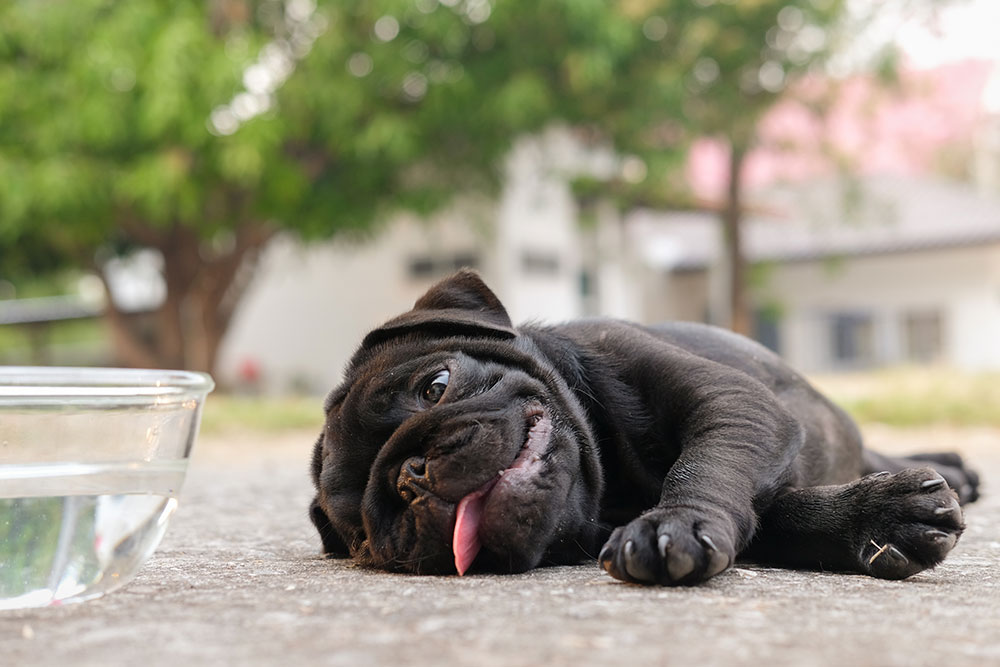
Dogs and cats cannot cool the way we do. People sweat over nearly the whole body, but a dog’s main tool is panting, moving air across a wet tongue and airways to shed heat, with only a little moisture loss through the paw pads. Cats work the same way and tend to hide the trouble longer. On a hot, humid Florida afternoon, that system runs out of room fast.
Some pets start the day at a disadvantage. A flat-faced dog moves far less air with every pant than a long-nosed one, which is why brachycephalic thermoregulation hinges so heavily on weight, with excess weight tipping an already limited cooling system into failure. Bulldogs, Frenchies, Persians, and other short-nosed pets need extra care in the heat. A few other groups carry the same disadvantage:
- Coat and color: Thick double coats and dark fur hold heat, and heavily coated breeds struggle more on humid days.
- Age and body condition: Puppies, kittens, and senior pets regulate temperature poorly, and overweight pets carry insulation they cannot shed.
- Health conditions: Heart disease, breathing problems, and laryngeal issues all shrink the margin before overheating sets in.
Because the starting point differs so much from pet to pet, heat plans should too. If a short-nosed breed or a pet carrying extra pounds lives in your home, a summer wellness visit can keep you informed of your pet’s individual risk factors.
Which Warning Signs Mean Your Pet Needs Help Now?
The signs climb a ladder from mild to true emergency, and catching it early is everything. Frantic panting, restlessness, and thick drool are the early warnings of heat stroke in pets; brick-red or pale gums, stumbling, and collapse mean the situation has already turned dangerous.
A pet caught low on that ladder often recovers fully, while one caught too late may not. Gum color is one of the most useful things a family can read at home. Healthy gums are a calm pink. As heat stroke builds, they often turn deep brick-red, and in the worst cases go pale or gray as the body loses ground.
| Early / mild | Heavy panting, restlessness, seeking cool spots, bright-pink gums, lots of drool | Move to cool air, offer small sips of water, start gentle cooling |
| Moderate | Thick or ropey drool, brick-red gums, glassy eyes, wobbling, vomiting or diarrhea | Start active cooling, call us, and bring your pet in |
| Severe | Pale or gray gums, collapse, disorientation, seizures, unresponsiveness | Emergency, cool on the way and get to us immediately |
If your dog or cat shows anything in the moderate or severe row, treat it as an emergency and move.
Your First Five Minutes: What Cooling Steps Come First?
Your job in this moment is calm, controlled first aid while you head for help, not a frantic rescue that overshoots. The first move is active cooling with cool tap water and airflow over the paws, belly, and armpits, not an ice bath or a soaked towel draped over the body. Follow these steps:
- Get out of the heat: Move your pet to shade or an air-conditioned room right away.
- Wet the right spots: Run cool or tepid water over the belly, armpits, groin, and paw pads, where blood runs close to the surface.
- Add airflow: Point a fan or AC vent at the damp fur so evaporation carries heat away.
- Offer small sips: Let your pet drink a little cool water if alert and willing, but never force it or squirt water into the mouth.
- Skip the ice: No ice baths and no ice-cold water, which clamp down surface blood vessels and can slow cooling or trigger shivering.
- Do not seal in heat: Do not lay wet towels over the body and leave them, since they trap heat rather than release it.
Cool for a few minutes, then get moving. Even a pet who seems to be bouncing back needs a professional look, so call us right away and cool on the drive if you can. The goal is steady progress toward a normal temperature, not the fastest possible drop.
Reading the Diagnosis: How Do We Confirm Heat Stroke?
We confirm heat stroke and gauge its severity by starting with the clues a family reads at home, then going deeper. We check core temperature, gum color, and mental alertness, then look past the surface with bloodwork and imaging that reveal what the heat has already done inside.
Diagnosis is not a single test but a picture built from several, and those numbers separate a pet that can go home soon from one that needs a hospital bed. Temperature tells us how far the crisis has climbed, while gum color and clotting checks hint at whether circulation is holding. Lab values flag early kidney and liver stress before a pet looks sick, and a scan can show fluid shifts or organ trouble a physical exam misses. Our in-house diagnostic imaging and bloodwork let us build that picture within minutes of arrival, so we can match the response to what the body actually needs rather than guessing.
Inside the Hospital: What Does Professional Treatment Involve?
In-clinic care is a coordinated, three-part rescue that home first aid simply cannot match. Once a pet is through our doors, heat stroke treatment in the hospital runs in three layers: controlled cooling to a safe temperature, intravenous fluids to restore blood volume, and close management of the complications that make the first 24 hours the most dangerous window.
That first layer means bringing the body back to a safe zone and then stopping on purpose, because overshooting into hypothermia is its own emergency. IV fluids refill a circulation that heat has left thin and struggling, support blood pressure, and help protect the kidneys. From there, the work shifts to watching for and heading off the damage heat leaves behind, using oxygen, bloodwork, and continuous monitoring. That is where hospitalization and critical care earn their place, because a heat stroke patient often needs hours of hands-on observation, not a single treatment. The reality behind all of it: heat stroke carries a real risk of death in that first day, and the best outcomes belong to pets who reach skilled care fast.
The Days After: Why Does Recovery Need Close Watching?
The crisis is not over when the temperature comes down. A pet that perks up can still be in real trouble, because delayed complications after heat stroke hit the kidneys, liver, heart, and gut over the next 24 to 72 hours, often as a whole-body inflammatory cascade doctors call SIRS.
That is why we may recommend a hospital stay even when your pet looks like their old self again. Heat injures cells everywhere at once: kidneys can start to fail, the liver and heart can falter, the gut lining can break down, and the whole body can tip into dehydration and dangerous inflammation. One of the most feared late problems is abnormal blood clotting, where the same overheated system that forms tiny clots throughout the body also starts to bleed internally, which is exactly why we watch stable-looking patients so closely. Catching a rising kidney value or an early shift in coagulation gives us a real chance to act.
Staying Ahead of the Heat: How Do You Keep an Active Pet Cool?
Prevention is far easier than rescue, and it comes down to steady hydration, smart timing, and never trusting a parked car. Everyday heat safety means fresh water offered often, a portable bottle and bowl away from home, and cooling aids like mats, damp towels, and a fan near a shaded rest spot.
Watch for that first hard panting on a walk and take a break before your pet asks for one. Activity needs the same care, and much of preventing heat stroke is timing: walks in the early morning or late evening, an easier pace on warm days, a hand pressed to the pavement before setting paws on it, and the discipline to end play the moment a pet slows down. Hot asphalt can burn paw pads in seconds, so if the back of your hand cannot rest on it for a five count, it is too hot for their feet.
And then there is the car, where too many warm-weather tragedies happen. A closed car can climb past 100°F in no time on a mild day, and cracked windows barely slow it, which is why hot vehicles claim pets’ lives every summer even during a quick errand. Never leave a pet in a parked car, not even for a minute. If your pet was shut in a hot car, call for triage instructions even if the signs look mild.
From Backyard to Living Room: How Do You Cool Cats and Homebound Pets?
Free-roaming cats and homebound pets both need heat plans, just different ones. Outdoor cat summer safety comes down to several shaded water stations refreshed through the day, a ventilated shelter out of direct sun, and a safe enclosure or supervised window that keeps a cat off hot pavement. Cats hide distress well, so fresh water and true shade are not optional in a Florida summer.
Indoors, the goal is a comfortable environment that quietly keeps activity low during the worst hours. Air conditioning and fans, a shaded resting corner, and access to cool tile flooring all help a pet ride out the heat. Enrichment matters too, because a settled pet is not a pacing, overheating one. During the hottest part of the day, a rotation of boredom busters keeps an energetic pet occupied indoors on cool flooring instead of pestering to go back out. A few DIY enrichment toys, like a frozen treat puzzle or a scattered-kibble scent game, tire a pet out mentally without the running and jumping that drive body temperature up. If you want an activity plan built around a heat-prone pet, book a wellness visit to get started.
Questions Families Ask After a Heat Scare
What temperature is dangerous for a dog or cat?
A normal temperature for a dog or cat runs roughly 100 to 102.5°F. Heat stroke becomes a serious concern once that number climbs past about 104°F, and anything at 106°F or higher puts organs at real risk. That said, you do not need a thermometer to act. Frantic panting, thick drool, and a wobbly, distressed pet on a hot day are reason enough to start cooling and call us.
My pet cooled down and seems fine now. Do we still need to come in?
Even a pet who seems back to normal still needs to come in, and skipping that visit is the mistake that costs pets. Looking better after cooling does not mean the danger has passed. Kidney, liver, and clotting problems can surface a day or two later in a pet that seemed recovered. A quick exam and some bloodwork let us catch those delayed effects while they are still treatable, so please have your pet seen even when everything looks normal again.
Are short-nosed breeds really at higher risk?
Short-nosed breeds really are at higher risk. Flat-faced dogs and cats like Bulldogs, Frenchies, Pugs, and Persians move far less cooling air with each pant, so they overheat faster and sooner than long-nosed pets. Extra weight makes it worse. These pets need shade, air conditioning, and very short activity in the heat, plus a low threshold for calling us if they start struggling to breathe or cool down.
Partnering With Us Through Every Hot Vero Beach Month
Heat stroke is a genuine emergency, but it is also one of the most preventable ones we see. Recognizing that early panting, timing activity around the cooler hours, keeping water everywhere, and never trusting a parked car will carry your dog or cat safely through a Florida summer. And if something does go wrong, calm cooling plus a fast trip to us gives your pet the best possible odds.
A little planning keeps the season fun for the whole household. To build a heat plan around your pet’s breed, age, and habits, schedule a summer safety check-in. And if a crisis does come, our team is here for emergency and critical care around the clock.