
Standing in the pet store dental aisle, where every package promises fresher breath, the real answer is simpler than the shelf makes it look: a toothbrush does the most, with wipes and gels as genuinely useful runners-up rather than gimmicks. Bristles physically sweep plaque off the tooth, wipes clear the surfaces they can reach, and gels leave behind ingredients that keep working after you step away. Water additives, dental chews, and dental diets can round out a routine, especially products carrying the Veterinary Oral Health Council (VOHC) seal, which have evidence behind their claims. None of it replaces professional cleanings, but the right mix at home stretches the time between them and keeps your dog or cat’s mouth comfortable.
Gentle, low-stress handling matters most when the patient refuses to open wide on command, and that is how we approach every mouth at Veterinary Medical Center of Indian River County in Vero Beach. Our dental cleanings and dental X-rays under anesthesia show us what is happening below the gumline, which tells us far more than breath and visible tartar ever could. Bring the wipes, gels, or chews you are curious about to your pet’s exam and we will tell you which ones are worth your money. When you are ready to sort the shelf into what works and what just smells minty, request an appointment; we will help you build a plan around your pet’s mouth, not the marketing.
Before You Buy: What the Shelf Won’t Tell You
- A toothbrush removes the most plaque of any at-home tool, but wipes, gels, water additives, dental diets, and the right chews all add real value when brushing every day isn’t realistic.
- Consistency beats perfection: a quick brush every other day, or even a daily wipe-down, does far more good than an occasional deep effort followed by weeks of nothing.
- The VOHC seal is your shortcut to products tested and proven to reduce plaque or tartar, cutting through the noise on the pet-store shelf.
- Even flawless home care can’t lift hardened tartar or treat disease below the gumline, which is why professional cleanings under anesthesia stay on the calendar.
Why Does At-Home Dental Care Matter So Much?
That funky smell when your dog yawns rarely comes from nowhere. As plaque hardens into tartar along the gumline, periodontal disease sets in, quietly eroding the tissue and bone that hold each tooth in place and putting added strain on the heart, kidneys, and liver.
Here’s how it unfolds:
- Plaque forms first: a sticky film of bacteria coats the teeth within hours of eating.
- Gingivitis follows: the gums turn red and tender as that film builds along the edges.
- Tartar sets: once plaque mineralizes, no amount of scrubbing at home will remove it.
- Disease goes deep: the trouble burrows below the gumline where you can’t see it, loosening teeth and letting bacteria drift into the bloodstream.
Most cats and dogs show early changes by age three, so the clock starts younger than families expect. Frequent home care is the single biggest lever you have over that timeline, and where brushing leaves off, professional dental cleanings under anesthesia take over with scaling and polishing no home routine can reach. That’s why we build a quick oral check into wellness exams and flag problems while they’re still small and easy to manage.
Is Toothbrushing Really the Gold Standard?
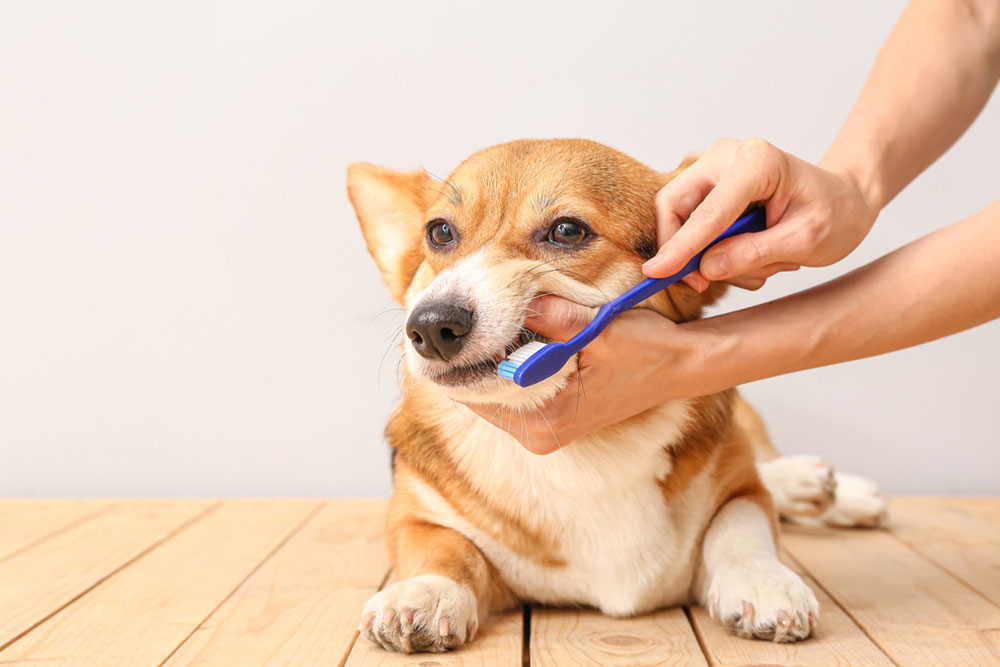
Nothing you can do at home beats a toothbrush. The bristles sweep away the bacterial film before it hardens into tartar, and no gel, additive, or chew fully replicates that mechanical scrubbing. Every day is ideal, though even an every-other-day habit delivers most of the protection.
Consistency matters far more than technique. A relaxed 30-second session most days protects the mouth better than a flawless scrub-down once a month. Plaque is a living biofilm, and disrupting it often is what keeps it from ever organizing into the hardened deposits that drive disease.
How Do I Get My Dog or Cat Used to a Toothbrush?
Go slow, and let the toothpaste be the treat. Introducing the brush goes far better when you lean on cooperative care techniques, short treat-paired sessions that let your dog or cat set the pace instead of being held still.
- Let the paste sell itself: offer a lick of pet-safe enzymatic toothpaste from your finger. Never reach for human toothpaste; the fluoride and foaming agents aren’t made to be swallowed.
- Graduate to a finger brush: same paste, same calm pace, just a brief rub along a few front teeth.
- Work up to the full brush: move along the cheek-facing surfaces, adding a tooth or two per session.
- End early and reward: stop while your pet is still relaxed, so the brush stays a good thing.
Technique differs by species and size. Brushing a dog’s teeth comes down to lifting the lip, angling the bristles toward the gumline, and concentrating on the outer surfaces of the big teeth in the back. Cats need a gentler hand, and brushing a cat’s teeth usually means a small finger brush, a dab of poultry- or seafood-flavored paste, and shorter sessions.
Rushing is what turns the brush into something to flee from. If watching it done in person would help, ask us to demonstrate on your own pet at your next visit.
What Can I Use If My Pet Refuses the Brush?
Plenty of cats and anxious dogs simply won’t accept a brush, and a dental wipe or an enzymatic gel is a real step up from doing nothing. Your goal should be daily dental care of some kind, whether it’s a brush, wipe, gel, powder, water additive, or chew.
Wipes and gauze are the easy on-ramp. Wrap a wipe or a square of gauze around your finger and rub the outer tooth surfaces, paying special attention to the canines and the cheek teeth where tartar loves to collect. They can’t dip below the gumline or reach the very back molars the way bristles do, so treat them as a stepping stone toward brushing rather than a total substitute. For a cat who tolerates a finger but not a brush, a daily wipe keeps plaque in check.
Gels, sprays, and powders work a different angle. Enzymatic formulas break down plaque chemically, so they help even without scrubbing. Many are no-rinse: you apply along the gumline or add a powder to food and let saliva carry it around the mouth. Look for enzyme systems on the label, and pair them with a wipe or brush whenever your pet allows. Many of these products, along with dental diets and VOHC-accepted chews, are stocked in our online pharmacy, so you can restock without a second guess about whether you grabbed the right thing.
Here’s how the main daily options stack up:
| Method | How it works | Best for |
| Toothbrush | Bristles physically sweep off plaque | The daily gold standard |
| Wipes or gauze | Friction clears surface plaque | Cats and pets who refuse a brush |
| Gels, sprays, powders | Enzymes break plaque down chemically | Adding to a brushing or wiping routine |
| Water additives | Antimicrobial or enzymatic ingredients in water | Hands-off daily support |
| Dental diets | Kibble texture wipes teeth while chewing | Extending time between cleanings |
| Dental chews | Chewing scrapes plaque mechanically | Gnawers who need a safe outlet |
Do Water Additives and Oral Rinses Work?
Water additives and oral rinses can nudge plaque and breath in the right direction by spreading antimicrobial or enzymatic ingredients through the whole mouth, but results vary a lot by brand. They’re a low-effort supplement to brushing, not a stand-in for it.
The appeal is obvious: you tip a capful into the water bowl and walk away, no wrestling required. The catch is palatability. Some cats and picky dogs notice the taste and drink less, so introduce any additive slowly, starting with a fraction of the recommended dose and building up as your pet keeps drinking normally. And if your pet has kidney or bladder concerns, check with our veterinarians before adding anything to the water, since a few ingredients aren’t ideal for those patients.
What About Dental Diets, Chews, and Treats?
Dental diets and the right chews earn their keep by cleaning teeth while your pet does something they already love, which is eat and gnaw. Both can stretch the time between professional cleanings, but neither erases the need for brushing or a real cleaning under anesthesia.
Do Dental Diets Really Work?
These foods do help. Dental diets work on two fronts at once, with a larger, fibrous kibble that wipes the tooth clean as the pet chews and additives that keep minerals in saliva from hardening into tartar. Because the effect only reaches the crown surfaces the kibble touches, a therapeutic food supports the routine rather than carrying it.
How Do I Pick a Chew That Helps Instead of Hurts?
Match the chew to your pet, and respect their teeth. The most common cause of a cracked tooth we see is a chew that simply won’t give, so dangerous chew items like real bones, antlers, and hard nylon are worth leaving out of the toy basket. A dependable test for safe chew toys is your thumbnail: if the surface doesn’t flex when you press a nail into it, it’s hard enough to fracture a tooth. Beyond edible options, dental chew toys with textured, flexible surfaces give plaque something to scrub against every time your pet settles in to gnaw.
If a chew ever does crack a tooth, book a visit that day, since a fractured tooth hurts more than most pets let on; if it happens outside regular hours, our 24/7 emergency care means you never have to wait until morning.
| Generally safer choices | Better to skip |
| Rubber chews that flex under a fingernail | Real or cooked bones |
| VOHC-accepted dental chews | Antlers and hooves |
| Textured dental chew toys | Hard nylon bones |
| Appropriately sized dental treats | Ice cubes and anything you can’t dent |
How Do I Know Which Products Are Legit?
The pet-store shelf is loud, but one small logo cuts through the noise. Sorting real products from marketing gets easier once you look for the seal of the Veterinary Oral Health Council, an independent group that grants it only to VOHC-accepted products proven in testing to reduce plaque or tartar.
The seal isn’t a paid endorsement; it’s earned by submitting data to that independent review, so the logo is reliable shorthand for evidence. You’ll find it on chews, water additives, diets, wipes, gels, and treats alike. When two products look identical on the shelf, the one wearing the seal is the safer bet, and we’re always glad to point you toward the ones that suit your pet’s mouth.
What Can Home Care Never Replace?
No brush, wipe, or chew can scrape off hardened tartar or heal infection hiding below the gumline. That work needs a complete cleaning under anesthesia, where we chart every tooth, scale above and below the gumline with an ultrasonic scaler, polish the surfaces, and probe for pockets of disease you’d never spot at home. Safe anesthesia is built into the process, from the pre-anesthetic exam and IV catheter to continuous monitoring while your pet sleeps. It also lets us take dental X-rays, which reveal root and bone problems invisible to the naked eye, and treat what we find in the same visit.
For pets in the maintenance stretch between those comprehensive cleanings, we also offer vet-supervised non-anesthetic dental cleanings through our partnership with Pet Dental Services. These polish up the visible crown surfaces and help a healthy mouth stay that way, and because they happen with veterinarians overseeing them, we know when a mouth needs more than a cosmetic touch-up. They don’t replace the comprehensive exam, X-rays, and below-the-gumline work that anesthesia makes possible, and we’ll always be straightforward about which one your pet actually needs.
How often your pet needs a full cleaning depends on species, breed, age, and how the home routine is going. Some pets do well with a professional visit every couple of years, while small dogs and certain cats benefit from one annually. We’ll look in the mouth at each exam and tell you honestly when it’s time.
How Do I Keep This Up?
The routines that stick are the ones bolted onto habits you already have, like a quick brush after your own nighttime teeth or a wipe before the evening walk once the Vero Beach heat lets up. Start small and let any home care count as a win rather than chasing a perfect streak.
Build in a backup for the inevitable off days. On a night the brush is a no-go, a dental chew, a spritz of spray, or a topped-off bowl of additive water keeps the momentum going. Share the job around the household so it doesn’t all ride on one person, and adjust the plan as your pet ages or their tolerance shifts.
You’ll know it’s working when breath stays fresher and the gums look pink rather than red at the edges. It’s time for a look, not more scrubbing at home, if you notice:
- Bleeding or newly red gums along the edges of the teeth
- A dropped chew or chewing on only one side of the mouth
- Pawing at the mouth or rubbing the face along furniture
- A sudden preference for soft food from a pet who used to crunch happily
Whenever you want a second opinion on products or a hand troubleshooting, reach out for coaching and product picks; a five-minute conversation often saves weeks of guessing.
Dental Home Care Questions Pet Families Ask Us Most
My dog’s breath is already terrible. Did I wait too long?
Bad breath is a signal, not a verdict. It usually means bacteria and early tartar have set up shop. Starting home care now still slows what’s happening, but strong odor also calls for a hands-on exam, since the smell can point to disease below the gumline that only a cleaning will resolve. Book a look, then build the routine from there.
How long until brushing makes a difference?
Fresher breath and calmer gums often show up within a week or two of regular sessions. What brushing can’t do is dissolve tartar that’s already cemented on; that mineralized buildup needs a professional cleaning to come off. Think of daily care as protecting a clean slate, so the best results come from pairing it with a cleaning when your pet is due.
Are dental treats enough on their own for my cat?
Treats and chews help, but on their own they rarely reach the gumline where feline dental disease tends to start. Cats especially benefit from a wipe or an enzymatic gel that touches those surfaces, even if a full brush is out of reach. Use treats as a bonus rather than the whole plan, look for the VOHC seal, and lean on gentle daily contact for the coverage treats alone will miss.
You Don’t Have to Sort the Dental Aisle Alone
The best dental routine is the one that fits your life and your pet’s temperament, and finding it is a lot easier with a second set of hands. When you’re ready, schedule a dental consultation at Veterinary Medical Center of Indian River County in Vero Beach and we’ll check where your pet’s mouth stands today, then map out a home plan you can actually stick with.