

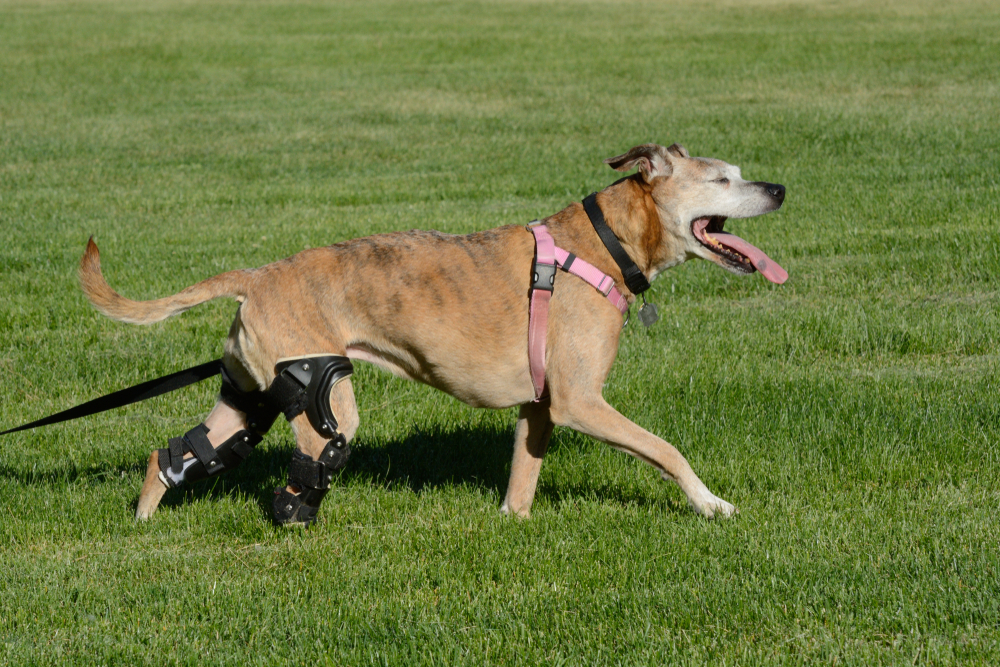
Dog Knee Injuries: Why CCL Tears Happen and How We Fix Them
You know your dog better than anyone, and when their usual enthusiastic greeting is replaced by a hesitant three-legged hop, your heart sinks a little. Is this a simple pulled muscle, broken bone, ligament tear, or something more serious? Will this take surgery to fix, or will it heal on its own?
A common reason for this sudden change is a torn cranial cruciate ligament, often called a CCL injury, which can be similar to an ACL injury in people. Thankfully, there are excellent options for helping them get back to happily chasing squirrels. Understanding what is happening inside the knee, why early diagnosis matters, and what happens if the injury goes untreated helps you make confident decisions about your dog’s care.
At Veterinary Medical Center of Indian River County in Vero Beach, we are often the first stop when a dog comes in limping, and our job is to figure out exactly what is going on. Our comprehensive approach to diagnosis, including advanced diagnostic imaging, means we can pinpoint the problem, explain your options clearly, and connect you with the right specialists when surgery is needed. We are here 24/7/365 to provide expert support and top-quality urgent care. Request an appointment or contact us to discuss your dog’s injury and start building a plan.
What Actually Happens Inside the Knee When the CCL Tears?
The cranial cruciate ligament is a tough band of tissue inside the knee joint that prevents the shin bone (tibia) from sliding forward relative to the thigh bone (femur). It also helps control rotation and keeps the joint stable during every step, turn, and jump your dog takes. When this ligament tears, whether partially or completely, the knee loses that stability. The tibia shifts forward with each stride, causing pain, inflammation, and abnormal wear on the cartilage and meniscus (a cushion of cartilage between the bones).
A canine cruciate ligament injury is one of the most common orthopedic problems in dogs. Unlike the sudden sports injuries that typically cause ACL tears in people, most dogs develop CCL disease gradually. The ligament weakens over time due to chronic inflammation, subtle structural stress, and repetitive loading before finally giving way. That means many tears are the endpoint of a process that has been building quietly for weeks or months.
Why Do CCL Tears Happen and Which Dogs Are Most at Risk?
Most CCL injuries result from a combination of anatomy, body condition, and activity patterns rather than one dramatic moment. Some dogs are simply built in ways that put more stress on the ligament over time.
Factors that increase risk include:
- Breed predisposition:Labrador Retrievers, Golden Retrievers, Rottweilers, Newfoundlands, and Staffordshire Terriers are among the breeds with higher rates of CCL disease, though any dog can be affected
- Excess body weight:Extra pounds increase the load on knee joints with every step. Overweight dogs are significantly more likely to tear a CCL and more likely to injure the opposite knee afterward
- Weekend-warrior exercise patterns:Dogs that are sedentary during the week and then run hard on weekends put sudden, high-intensity stress on ligaments that are not conditioned for it
- Age and degeneration:Middle-aged dogs (4 to 8 years) are most commonly affected as ligaments weaken from years of use
- Slippery surfaces and sudden pivoting:Hardwood floors, wet grass, and abrupt direction changes during play increase the chance of a twist that finishes off an already weakened ligament
Understanding these risk factors is the first step toward prevention. During routine wellness exams, our team evaluates joint health, body condition, and activity levels so we can flag concerns before they become injuries.
What Are the Signs of a CCL Tear?
If you are wondering why your dog is limping, a CCL injury should be high on the list, especially if the lameness involves a back leg. Some dogs go suddenly lame during play, while others develop a gradual, worsening limp over weeks.
Signs owners commonly notice:
- Hind-limb lameness that worsens after exercise or rest
- Difficulty rising from a lying position, reluctance to jump into the car, or hesitation on stairs
- Sitting with the affected leg kicked out to the side rather than tucked underneath
- Visible swelling around the knee or a stiff, guarded gait
- A toe-touching walk where the paw barely contacts the ground
If your dog is showing any of these signs, keep activity light (leash walks only, no running or jumping) and call us. Early evaluation reduces strain on the injured knee and, just as importantly, on the opposite leg that is working overtime to compensate.
How Do We Diagnose a CCL Tear?
Confirming a CCL injury involves a hands-on orthopedic exam combined with targeted imaging. Every dog is different, so we tailor the workup to your pet’s size, temperament, and symptoms.
During your visit, we typically:
- Perform stability tests by gently manipulating the knee to check for abnormal forward movement of the tibia (called cranial drawer and tibial thrust tests). Sedation is sometimes needed to get reliable results in tense or painful dogs.
- Take X-rays to evaluate bone alignment, joint swelling, and the degree of arthritis already present. While ligaments do not show up on X-rays, the secondary changes they cause do. This also helps us rule out fractures, arthritis, and bone cancers.
- Assess the meniscus based on exam findings and imaging clues. Meniscal tears frequently accompany CCL injuries and affect the treatment plan.
- Evaluate the opposite knee, since a significant percentage of dogs with one CCL tear will injure the other side.
Our diagnostic imaging capabilities allow us to complete this workup efficiently, often during a single visit. For dogs presenting with sudden, severe lameness, our 24/7 emergency services team can provide immediate assessment and pain relief while we develop a plan.
Why Does the Other Knee So Often Go Next?
This is one of the most important things for owners to understand. Studies suggest that 40 to 60 percent of dogs who tear one CCL will eventually injure the opposite knee, often within one to two years. There are several reasons this happens.
The same underlying factors that weakened the first ligament, such as genetics, body condition, and conformation, are affecting the other knee simultaneously. Once one leg is injured, your dog shifts weight to the opposite side to avoid pain, which puts significantly more stress on a ligament that may already be compromised. Dogs that are overweight carry an even higher contralateral risk because both knees are under chronic excess load.
What you can do to protect the other knee:
- Pursue treatment for the injured knee promptly so your dog stops overloading the healthy leg
- Achieve and maintain an ideal body weight (this is the single most impactful thing you can do)
- Build consistent, moderate exercise habits rather than allowing boom-and-bust activity patterns
- Follow through with rehabilitation to restore balanced strength and movement
Protecting the second knee is a major reason we encourage owners not to take a “wait and see” approach with the first injury.
What Are the Treatment Options?
Most dogs with a complete CCL tear do best with surgical stabilization. Surgery restores mechanical stability to the knee, allows the joint to function more normally, and slows the progression of arthritis. The two most common procedures are TPLO (Tibial Plateau Leveling Osteotomy), which changes the angle of the tibia so the knee no longer needs the CCL to stay stable, and lateral suture (extracapsular) repair, which uses a strong synthetic material outside the joint to limit abnormal movement.
The right procedure depends on your dog’s size, age, activity level, and knee anatomy. Larger, more active dogs typically benefit most from TPLO, while smaller or less active dogs may be good candidates for lateral suture repair.
For very small dogs or dogs with partial tears and minimal instability, conservative (non-surgical) management with strict rest, anti-inflammatory medications, joint support, and rehabilitation may be considered. However, conservative management does not restore stability, and arthritis typically progresses faster without surgical intervention.
Our role at VMC of Indian River County is to diagnose the injury accurately, manage pain, and guide you through your options. When orthopedic surgery is the best path, we coordinate referrals to ensure your dog receives skilled surgical care and a seamless transition back to our team for follow-up.
What Happens If a CCL Tear Goes Untreated?
This is a question many owners ask, especially when surgery feels overwhelming. The honest answer is that untreated CCL tears do not heal on their own, and the knee continues to deteriorate.
Without treatment, the unstable knee develops progressive arthritis as cartilage wears down from abnormal movement. The meniscus, which acts as a shock absorber, is at high risk of tearing due to constant abnormal sliding of the tibia. Chronic pain and muscle loss develop as your dog avoids using the leg, and the muscles that support the knee weaken from disuse. The opposite knee faces accelerated damage from compensation.
Over time, an untreated CCL injury leads to chronic lameness, significant loss of quality of life, and changes in mobility that become increasingly difficult to reverse. Early treatment, whether surgical or a structured conservative plan, gives your dog the best chance at long-term comfort and function.
Why Is Rehabilitation So Important After a CCL Injury?
Whether your dog has surgery or is managed conservatively, a structured rehabilitation plan is essential to the outcome. Surgery fixes the mechanical problem, but rehab rebuilds the strength, flexibility, and coordination that protect the knee going forward.
Rehabilitation typically progresses through stages:
- Early recovery (weeks 1 to 4):Short, controlled leash walks and gentle range-of-motion exercises to maintain joint mobility without stressing the repair
- Strengthening phase (weeks 4 to 8):Slow sit-to-stand exercises, weight shifting, and controlled turns to rebuild the muscles that support the knee
- Return to activity (weeks 8 to 12 and beyond):Gradual reintroduction of longer walks, varied terrain, and eventually off-leash activity based on progress
Professional rehabilitation therapies such as underwater treadmill, therapeutic exercises, and manual therapy can accelerate recovery and improve outcomes. We also incorporate laser therapy to reduce inflammation, manage pain, and support tissue healing during recovery.
Crate rest is a necessary part of early recovery and protects the repair from sudden, risky movement. It does not mean isolation. A well-sized crate with non-slip bedding, food puzzles, and a calm routine helps your dog heal without anxiety. Our team provides individualised guidance on making crate rest manageable.
How Can You Protect Your Dog’s Knees Long Term?
Prevention is not always possible, but you can significantly reduce risk and protect joint health with consistent habits.
Warm up with a few minutes of slow leash walking before vigorous play, and cool down gently afterward. Manage weight through portion control and balanced nutrition, since maintaining a lean body condition is the single most effective way to protect joints. Keep nails trimmed and add traction with rugs or mats on slippery floors to reduce twisting forces on the knees. Build a regular, moderate exercise routine rather than allowing long stretches of inactivity followed by intense bursts.
We reinforce weight goals and joint health during wellness exams to help you stay ahead of problems.

Frequently Asked Questions
Can a CCL tear heal without surgery?
The ligament itself does not regenerate. Scar tissue forms around the joint over time, which can provide some stability in very small dogs, but arthritis progresses faster without surgical repair. Most dogs over 15 to 20 pounds do significantly better with surgery.
How soon should my dog be seen after a suspected CCL tear?
As soon as possible. Early evaluation and pain management reduce further damage to the knee and protect the opposite leg from compensation injuries.
Will my dog be normal after surgery?
Most dogs return to happy, active lives after CCL surgery and rehabilitation. Some degree of arthritis is expected since it begins as soon as the ligament fails, but surgery and rehab slow its progression significantly.
How long is recovery?
Typical recovery is 8 to 12 weeks with activity restrictions, though full return to normal activity may take 4 to 6 months depending on the procedure and your dog’s response to rehab.
Getting Your Dog Back to Joyful Movement
Early recognition, accurate diagnosis, and a well-matched treatment plan set your dog up for the strongest possible recovery. Whether that means surgical referral or a structured conservative approach, the goal is the same: restore comfort, protect the opposite knee, and preserve your dog’s quality of life for years to come.
If your dog is limping, favouring a back leg, or struggling to get up, do not wait to see if it resolves on its own. Request an appointment or contact us to start with a thorough evaluation. Our team is here 24/7/365 to guide you through each step with calm, expert support.



Leave A Comment