

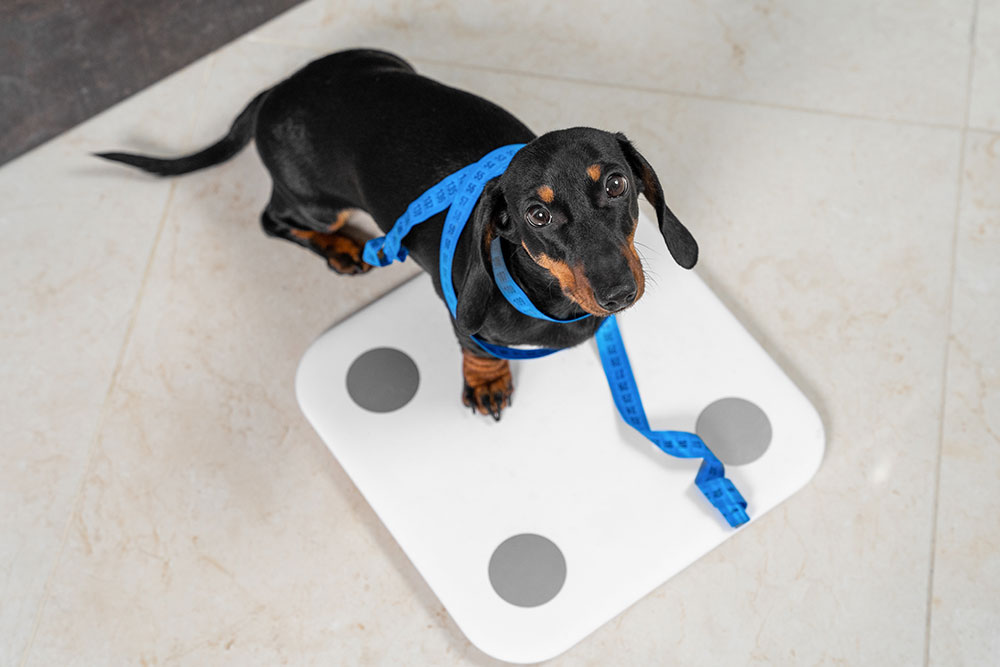
There is no single chart that can tell you exactly what your dog or cat should weigh. Two pets of the same breed, age, and even height can have different healthy weights depending on their frame and muscle mass. That is why we look at body condition as well as the number on the scale. At an ideal body condition, you should be able to feel the ribs without pressing through a thick layer of fat, see a waist from above, and notice a tuck behind the ribs when your pet is viewed from the side. Once we know what healthy looks and feels like for your individual pet, we can estimate an ideal weight and figure out what it will take to get there or stay there. That might mean adjusting portions and treats, changing foods, adding appropriate activity, or simply keeping an eye on a pet who is already right where they should be. If weight loss is needed, gradual progress matters, especially for overweight cats, who can become seriously ill if their food intake is reduced too quickly.
At Veterinary Medical Center of Indian River County in Vero Beach, we assess weight and body condition during every wellness exam and help you turn those numbers into something practical at home. We can work with you to set a realistic goal, determine how much your pet should actually be eating, and find changes that fit your routine rather than handing you a target and leaving you to figure out the rest. Activity is part of the picture too, and for social dogs who need another outlet when Florida weather limits outdoor exercise, our doggy daycare can provide supervised opportunities to play and move. Whether you are wondering if your pet needs to gain, lose, or simply maintain, ask us your questions and we can help you find a healthy target and a realistic way to stay there.
Body Condition Scoring Made Practical
- Body condition scoring looks at fat and muscle together, so it tells us more about your pet’s health than the scale can on its own.
- Most dogs and cats sit healthiest at a 4 or 5 out of 9, where the ribs are easy to find, the waist shows from above, and the belly tucks up from the side.
- Extra weight raises the odds of arthritis, diabetes, back injuries, breathing trouble, and heat emergencies, and it shortens the years you get together.
- Cats need slow, supervised weight loss, because cutting their calories too fast can trigger a life-threatening liver disease.
What Happens When We Score Your Pet’s Body Condition at an Exam?
It’s about a minute of hands-on work, and it happens before we ever mention a diet. Body condition scoring rates a pet from 1 to 9 using what you can see from above and from the side plus what you can feel over the ribs, waist, and belly, with 4 to 5 sitting in the ideal range.
Our hands do most of the talking. We run flat palms along the rib cage, feel over the spine and hips, check the fat pad at the base of the tail, and look at your pet standing from above and from the side.
| Score | What you see | What you feel |
|---|---|---|
| 1 to 3 (too thin) | Ribs, spine, and hip bones stand out; dramatic tuck at the belly | Bone with almost no covering, and muscle over the back may feel wasted |
| 4 to 5 (ideal) | Clear waist behind the ribs from above; belly rises from the side | Ribs easy to count under a thin layer of tissue |
| 6 to 7 (overweight) | Waist softening or gone; back looks broad and flat | You have to press to find ribs; a fat pad sits over the lower back and tail base |
| 8 to 9 (obese) | No waist at all; belly sags; fat over the chest, hips, and limbs | Ribs hidden; heavy, thick padding everywhere you press |
Run the same check at home once a month. Fluffy pets fool everybody, so long-coated dogs and cats need hands rather than eyes, and a wet cat in the bath is often a surprise. If you’d rather be shown than told, book a hands-on body condition check and we’ll walk you through it on your own pet.
Why Isn’t the Number on the Scale Enough on Its Own?
Weight tells us how heavy your pet is, not what they’re made of. A pet who holds steady on the scale while quietly losing muscle is not thriving, and two dogs at the same weight can carry very different amounts of lean tissue.
Build matters too. A 70-pound Lab and a 70-pound Greyhound are not the same animal, and muscle is denser than fat, so a fit, heavily muscled dog can weigh more than a soft one of the same height and be in far better shape. What we’re really watching is how a pet moves: whether they still hop onto the bed, whether the walk gets shorter every month, whether a middle-aged cat still bothers to jump to the counter. Those changes show up in body condition at wellness exams long before they show up as a crisis.
What Does Carrying Extra Weight Do to a Dog or Cat’s Body?
Extra fat isn’t neutral padding sitting quietly on the outside. It loads joints and spine, crowds the lungs, traps heat, and trims years off a life. Fat tissue is metabolically active and interferes with insulin, which is why diabetes turns up so much more often in overweight cats and usually means twice-daily injections and ongoing monitoring for life.
- Joints and spine: Arthritis arrives earlier and hurts more in a heavy pet, because every step drives more force through a worn joint. Dogs are more prone to cruciate ligament ruptures and hip dysplasia worsens. Extra pounds load the spine as well, and intervertebral disc disease can go from a stiff, reluctant back to emergency surgery in a matter of hours.
- Heart and breathing: Higher blood pressure and a harder-working heart are common in heavy pets, and flat-faced breeds such as Bulldogs, Pugs, and Persians lose airway room they never had to spare.
- Heat: Fat insulates and slows heat loss, so heat stroke arrives faster in a heavy dog than most families expect during a Vero Beach summer.
- Urinary tract: Urinary stones and bladder inflammation show up more often, and a rounded cat who can’t groom or posture comfortably may start avoiding the litter box.
- Anesthesia: Body fat changes how drugs are distributed and makes breathing support trickier, so even routine procedures carry more risk than they need to.
- Lifespan: Lean dogs live meaningfully longer than their heavier littermates, with less arthritis along the way.
Weight costs money as well, though not mainly at the food bin. Nobody sets out to overfeed; love just shows up as a biscuit at the back door. A heavy pet eats more than they need every single day, and the far bigger expense lands later, when the weight becomes a disease that needs treating: insulin for a diabetic cat, long-term pain medication for an arthritic dog, a back injury that ends in surgery.
What About Pets Who Are Too Thin?
Too little weight carries its own risks, and they’re serious. Underweight pets fight infection poorly, struggle to hold body temperature, lose the muscle that keeps them steady on their feet, and heal slowly after illness or injury. A thin senior cat is losing muscle she may never rebuild. If your pet is dropping weight or can’t seem to gain, schedule a workup rather than simply adding food, because the cause usually needs finding first.
How Much Should You Be Feeding?
Portions should be built around a pet’s ideal weight instead of the number on today’s scale, and a calorie calculator gives you a daily starting target to measure meals against. Bag guidelines are written for an average intact adult, which describes almost none of the pets we see. Calorie needs also fall after a spay or neuter, so portions set before surgery usually need trimming within a few weeks of it.
Measure every meal with a gram scale or a real measuring cup, not the coffee mug that lives in the food bin. Scooping by eye runs high, and a small daily overage becomes several pounds a year on a 12-pound cat. Everything else counts as well: dental chews, training rewards, the crust of toast, the peanut butter in a puzzle toy. Treats should stay under roughly a tenth of the day’s calories, and the rest of the food comes down to make room for them.
Cats cannot be crash-dieted. Cutting calories too fast pushes the body to mobilize fat faster than the liver can process it, and hepatic lipidosis can become fatal within days. Never halve a cat’s food on your own, and never withhold meals from a cat who has already stopped eating. Feline weight loss belongs on a supervised plan with regular weigh-ins.
Is a Prescription Weight Diet Better Than a Grocery-Store Light Formula?
Therapeutic weight-loss diets earn their keep through feeding trials that prove they strip fat while protecting lean muscle, testing that over-the-counter “light” and “healthy weight” bags aren’t required to pass. They also keep pets full on fewer calories, partly through fiber in weight loss diets, which adds bulk so a smaller portion still registers as a real meal. For a pet with a lot to lose, or one juggling arthritis or a metabolic condition at the same time, that predictability is worth having. A modest goal in an otherwise healthy pet may need nothing more than smaller portions of the current food. Our veterinarians can match the food to your pet’s body condition, health history, and goal.
What Does Safe Weight Loss Look Like Week to Week?
Safe progress is slow enough to feel boring. Dog weight loss moves at roughly one to two percent of body weight a week, which on a 60-pound Labrador is about half a pound to a pound at a time. Cats go slower still. Crash diets backfire, cost muscle, and the weight comes straight back.
Cats also exercise in short bursts, so cat weight loss runs on wand toys and scattered kibble rather than anything that looks like a walk.
| Dogs | Cats | |
|---|---|---|
| Movement | Two brisk outings daily in the cool part of the day, plus swimming or fetch for joints that need low impact | Three to five play sessions of five minutes each, timed just before meals |
| Meals | Two or three measured meals on a schedule, no free feeding, in puzzle toys or snuffle mats | Small measured portions in puzzle feeders or scattered so hunting replaces grazing |
| Treats | Green beans, carrot coins, or a few pieces of the daily kibble counted out in advance | A single kibble as the reward, or a lick of water from a tuna can instead of the tuna |
| Tracking | Weigh monthly and rescore at home; if the scale stalls for six weeks, cut about 10 percent | Weigh monthly; hold portions steady for at least four weeks before adjusting anything |
Structured play burns more than a slow leash walk ever will, and a day of supervised daycare play gives a dog the movement a hot afternoon at home simply can’t. Bring your pet by for a weigh-in whenever it suits you, since watching a trend beats guessing at one.
When Is Weight Change a Sign of Something Medical?
Weight that moves while meals stay the same deserves a closer look. Several conditions change appetite, metabolism, and how the body banks or burns energy, and treating the underlying disease is usually what makes healthy weight change possible again.
In dogs, three patterns come up most. Weight gain paired with a dull coat, flaky skin, and a dog who seems cold and slow points toward hypothyroidism, which shows up on a blood panel and is managed with an inexpensive daily pill. Cushing’s disease creates a pot-bellied silhouette with thinning fur, heavy drinking, and constant hunger, even as muscle quietly disappears from the topline. Diabetes tends to run the other way, with a good appetite alongside steady weight loss, plus more water bowls emptied and more trips outside.
Cats have their own patterns, usually trending toward weight loss. A senior cat who eats everything in sight and still loses weight is the classic picture of hyperthyroidism, where an overactive thyroid runs metabolism far past what food can keep up with. Chronic kidney disease thins a cat gradually, taking muscle first, usually with more drinking and a fading interest in food. Lymphoma in the intestines or inflammatory bowel disease can also cause slow weight loss.
Sorting this out starts with lab work: a blood count, a chemistry panel, and a urinalysis. When the picture calls for a look at the organs themselves, our ultrasound and digital X-ray fill in what bloodwork can’t. Annual screening panels are worth doing even when nothing seems wrong, because a baseline from a healthy year turns a vague “within normal limits” into a clear shift away from your pet’s own normal.
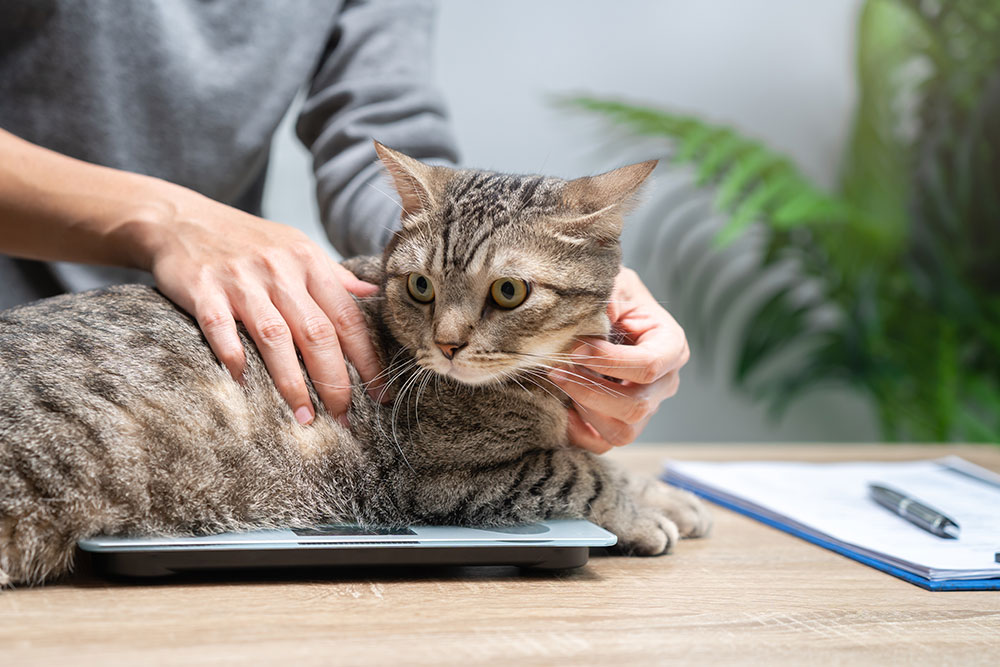
How Often Should Body Condition Be Rechecked as Your Pet Ages?
Body condition needs rechecking at every stage, because the target keeps moving. Puppies and kittens change shape almost weekly, adults need steady maintenance, and seniors can lose muscle while gaining fat, so a stable number on the scale can hide a real decline.
Early habits are the easiest ones to keep, so puppy and kitten visits are a good place to settle portions, treat rules, and what a healthy shape should feel like before anybody’s routine hardens. For adult dogs and cats, twice-yearly exams catch weight trends and early disease while both are still small problems, and every visit is a chance to adjust portions, revisit the food, and reset activity goals for the pet in front of us today.
Your Pet Weight Questions, Answered
Is my cat big-boned, or just overweight?
Frame size is real, but it doesn’t account for much. Bone structure varies less between cats than most families expect, and a Maine Coon should still have a waist and findable ribs, just on a larger frame. Feel along the rib cage: if you have to press through padding to count ribs, that’s fat, not bone. The belly pouch that swings when a cat trots is a normal anatomical flap and can be present in a perfectly lean cat, so judge by the ribs and waist instead.
My dog acts starving on the new portion. What can I do?
Hunger usually settles within a couple of weeks, but you can help it along. Split the day’s food into three or four small meals so something arrives more often, add water or a few tablespoons of canned pumpkin for volume, and serve meals in a puzzle feeder so dinner takes twenty minutes instead of eight seconds. Green beans and cucumber bulk up a bowl for almost nothing, and a therapeutic weight diet is built for exactly this problem.
How long does it take to reach a healthy weight?
Plan in months, not weeks. A dog who needs to lose about 15 percent of their body weight typically takes four to six months at a safe pace, and cats often need six to twelve. Gradual loss protects muscle and holds better over time. We recheck weight and body condition along the way and adjust portions when progress stalls, which it usually does at least once.
A Lean Pet Handles a Vero Beach Summer Better
Better body condition shows up in ordinary ways: an easier walk before the heat sets in, a cat who jumps to the windowsill again, a senior dog who gets up without thinking about it first. That’s the real payoff, along with more years of it.
Saying no to a hopeful face at the counter is hard, and none of this works if the plan doesn’t fit your household. Tell us what your days look like and we’ll build something you can keep. Reach out to Veterinary Medical Center of Indian River County and we’ll take an honest, unhurried look at where your pet stands and what it would take to get them comfortable.



Leave A Comment