
In an active outdoor environment like Vero Beach, pets are constantly exposed to things that can stimulate the immune system, from insect bites and minor skin infections to environmental irritants, allergens, and tick-borne disease. Because lymph nodes are part of the body’s immune defense system, they can sometimes enlarge in response to these everyday exposures. But swollen lymph nodes are not something owners should automatically dismiss as harmless, especially when the swelling persists, continues growing, or is accompanied by changes like lethargy, appetite loss, weight loss, or low energy. One of the challenges is that enlarged lymph nodes can look deceptively minor from the outside while signaling infections, immune disorders, or even cancers like lymphoma internally.
Veterinary Medical Center of Indian River County is Vero Beach’s full-service veterinary facility with 24/7 emergency capability alongside comprehensive general medicine and in-house diagnostics. When you bring in your pet with a suspicious lump, we do not just palpate and reassure. We use cytology, imaging, and lab analysis to tell you what we are actually dealing with. Request an appointment to have a swollen lymph node evaluated so we can find the cause and start treatment right away.
Important Information
- The pattern of lymph node involvement provides meaningful diagnostic information before any testing begins: a single firm node points to local infection, multiple firm painless nodes in an otherwise well dog raises concern for lymphoma, and generalized enlargement suggests a systemic process.
- Florida’s climate creates year-round risk for tick-borne diseases, fungal infections, and parasitic exposure that all can produce lymphadenopathy, which is why year-round parasite prevention matters more in our region than in cooler climates.
- Fine-needle aspiration is typically the first diagnostic step because it is quick, well-tolerated, and produces a clear answer in many cases without requiring sedation.
- Cytology, bloodwork, and imaging together identify most causes of lymph node enlargement, allowing treatment to begin promptly rather than after weeks of speculation.
What Do Lymph Nodes Do and Where Are They Found?
Lymph nodes are immune checkpoints distributed throughout the body. They filter lymph fluid, capture pathogens that have entered the body, and coordinate the immune response when something harmful is detected. When everything is working normally, you cannot even feel them. When they enlarge, it is because the immune system has detected something that requires response.
The accessible nodes you can check at home are:
- Popliteal nodes: behind each knee, in the soft tissue behind the joint
- Submandibular nodes: under the jaw, on either side just behind the jawbone
- Inguinal nodes: in the groin area at the junction of the inner thigh and the abdomen
- Prescapular nodes: in front of the shoulders, where the neck meets the chest
- Axillary nodes: in the armpits, deep in the soft tissue between the body wall and the upper foreleg
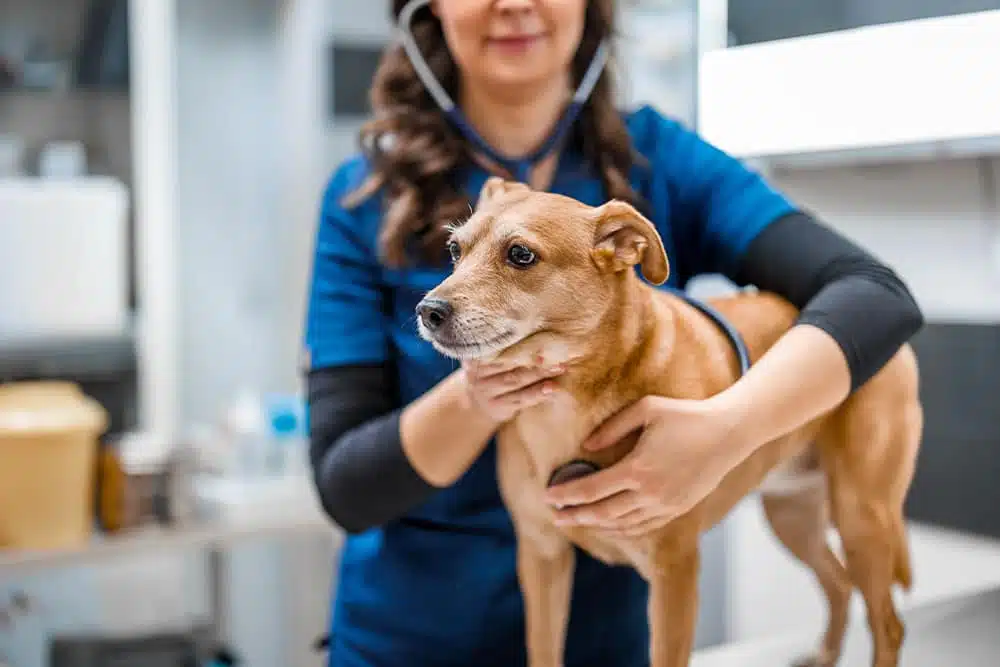
These are the nodes a veterinarian palpates during physical exam, and they are the same nodes you can monitor at home once you know what they feel like in your pet at baseline. Lymph node palpation is a standard part of every preventive care visit at our wellness exams, which is one of the reasons routine appointments matter even for healthy pets.
What Causes Lymph Nodes to Swell in Pets?
The pattern of involvement provides meaningful diagnostic information before any testing begins. Which nodes are enlarged, how firm and painful they feel, and whether the swelling is isolated to one area or distributed across multiple regions all suggest different categories of cause:
- A single enlarged node near a wound, infected tooth, or skin lesion typically suggests local infection draining to that node
- Two or more nodes in the same region suggest a regional infection or process
- Generalized lymphadenopathy (multiple nodes enlarged across the body) suggests a systemic process: widespread infection, immune-mediated disease, or cancer
Painful, warm nodes typically indicate active inflammation. Firm, fixed, or particularly large nodes raise concern for cancer. Soft, mobile nodes that increase modestly often correlate with reactive inflammation.
Infections and Reactive Lymph Node Swelling
Infections are among the most common causes of lymphadenopathy, and Florida’s climate creates year-round exposure to several of them. The categories worth knowing about:
- Tick-borne diseases: highly relevant in Florida’s climate. Lyme disease, ehrlichia and anaplasma infections, and other tick-borne pathogens can cause lymph node enlargement alongside fever, lethargy, joint pain, and various other symptoms.
- Bacterial diseases: leptospirosis (a bacterial infection contracted through contact with contaminated water or wildlife) can cause systemic illness with lymphadenopathy. Mycobacteriosis is a less common but important cause in cats, particularly outdoor cats.
- Fungal diseases: particularly relevant in the southeastern United States. Fungal disease workups should be considered for pets with persistent lymphadenopathy and respiratory or systemic signs. Blastomycosis and histoplasmosis are more common in our region. Aspergillosis is another fungal possibility. Valley Fever primarily affects pets in the southwestern United States but can occur in pets that have traveled there.
- Viral diseases in cats: feline leukemia virus (FeLV) and feline immunodeficiency virus (FIV), both of which can cause persistent lymphadenopathy among other systemic effects.
- Parasitic causes: toxoplasmosis (particularly relevant in cats), intestinal parasites (heavy worm burdens can produce reactive lymph node changes), giardia, and significant external parasites loads (severe flea infestations or mange can produce reactive lymphadenopathy).
Cancer as a Cause of Lymph Node Swelling
Canine lymphoma is one of the most common causes of sudden, dramatic lymph node swelling in dogs. The classic presentation is multiple firm, non-painful lymph nodes that become noticeable over days to weeks in your dog who otherwise seems entirely well. Many dogs with lymphoma show no symptoms beyond the lymph node changes initially; they are eating, drinking, playing, and behaving normally while the immune system is being progressively replaced by cancerous lymphocytes.
The numbers tell the story: an estimated 1 in 15 dogs born today will develop lymphoma in their lifetime, and that risk climbs to roughly 1 in 8 for Golden Retrievers. The encouraging counterpoint is that newer blood-based screening tests can flag lymphoma months earlier than traditional methods, often before any visible signs appear, which gives families and veterinary teams a meaningful head start on planning treatment.
Lymphoma diagnosis and subtype shape the entire treatment and prognosis conversation. The various subtypes (B-cell, T-cell, indolent versus aggressive forms) have substantially different responses to treatment and different expected outcomes. Accurate early testing makes the difference between assumptions and informed decision-making.
Feline lymphoma presents differently than the canine form. Most feline lymphoma is gastrointestinal, presenting as chronic vomiting, weight loss, or appetite changes rather than visible lymph node enlargement. Some feline lymphomas do involve external nodes; some involve only abdominal nodes detectable by palpation or imaging.
Other types of cancer in pets can also spread to lymph nodes. Mast cell tumors, mammary cancer, oral cancer, and various other malignancies use the lymphatic system as one route of spread, making lymph node evaluation an important part of cancer staging.
Immune-Mediated Conditions, Allergies, and Other Causes
Several non-infectious, non-cancerous conditions also produce lymphadenopathy:
- Immune-mediated hemolytic anemia (IMHA) and other immune-mediated diseases can produce lymph node changes alongside their primary effects
- Severe allergies, particularly atopic dermatitis with secondary skin infections, can produce reactive lymphadenopathy in nodes draining the affected skin
- Vaccination reactions can occasionally produce localized lymph node swelling in the days following vaccination, typically self-limiting and resolving over a few weeks
These conditions are indistinguishable from more common causes on physical exam alone, which is why the same systematic workup applies regardless of what we suspect.
How Are Enlarged Lymph Nodes Diagnosed in Pets?
The diagnostic process moves systematically from physical findings to targeted testing, with each step narrowing the differential. Physical exam alone tells us a lot, but cytology and imaging are what actually identify the cause in most cases. The choice of next test depends on what the exam suggests, the pet’s overall health, and how quickly we need an answer.
What the Physical Exam Reveals
During palpation, we assess size (estimated against your pet’s normal baseline), texture (soft versus firm versus hard), consistency (uniform versus nodular), symmetry (matched on both sides versus asymmetric), tenderness, and whether nodes move freely under the skin or feel fixed in place.
The pattern directs the urgency and type of investigation that follows. Severely enlarged firm fixed nodes warrant rapid workup; mildly reactive soft mobile nodes may warrant observation with rechecks.
Fine-Needle Aspiration and Biopsy
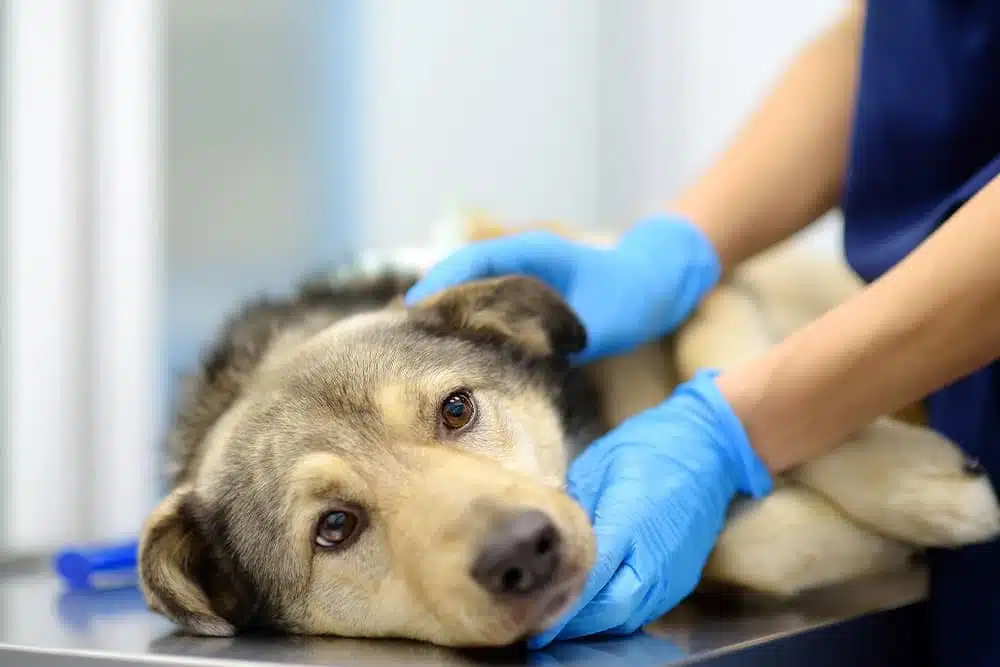
Fine-needle aspiration (FNA) is the first diagnostic step for lymph node evaluation. A small needle collects cells for microscopic evaluation. The procedure is brief, minimally invasive, and most pets tolerate it like a vaccine without sedation.
Cytology answers many questions: whether the lymph node contains normal architecture or has been replaced by abnormal cells, whether infection or inflammation is present, and often a presumptive diagnosis when conditions like lymphoma are present.
Some diagnoses (particularly lymphoma subtyping for treatment selection) require biopsy with full architecture preserved rather than just individual cells. Lymph node biopsy is performed in our hospital when the case requires it.
Blood Work, Tick Testing, and Imaging
Beyond direct lymph node evaluation, the workup typically includes:
- Complete blood count and chemistry panel: screen for systemic infection, anemia, organ disease, and signs of immune dysregulation
- Tick-borne disease testing: standard given Florida’s tick activity throughout much of the year
- Infectious organism testing: as indicated by clinical presentation (FeLV/FIV in cats, fungal serology, leptospirosis testing)
- Urinalysis: evaluates kidney function and other systemic indicators
- Chest radiographs: assess thoracic nodes and screen for pulmonary involvement
- Abdominal ultrasound: evaluates internal lymph nodes, spleen, liver, and other organs
When lymphoma is being considered, staging through imaging guides treatment and prognosis. The presence or absence of internal organ involvement substantially affects treatment recommendations. In-house laboratory capabilities allow many of these results to return rapidly, supporting same-day decision-making for time-sensitive cases.
What Treatment Options Are Available for Lymph Node Conditions?
Treatment follows diagnosis. Starting treatment before the cause is confirmed leads to wrong medications and delayed resolution, which is why getting the diagnostic workup right comes first. Once the cause is identified, treatment is generally direct and targeted to the underlying problem.
The major categories and their approaches:
- Bacterial infections: treated with appropriate antibiotics, often guided by cultures when possible
- Tick-borne diseases: treated with doxycycline or other targeted antibiotics, often for several weeks
- Fungal infections: treated with antifungal medications, typically for extended periods (months in many cases)
- Viral infections: managed supportively, with treatment focused on secondary effects rather than the virus itself
- Parasitic infections: treated with appropriate antiparasitic medications and concurrent management of secondary effects
- Allergies and atopic disease: managed with allergy treatment and management of any secondary skin infections
- Lymphoma: treated with chemotherapy protocols tailored to the specific subtype, with referral to veterinary oncology when comprehensive treatment is being considered
- Other cancers: treated according to the specific diagnosis, with surgery, chemotherapy, radiation, or combinations as appropriate
- Immune-mediated conditions: managed with immunosuppressive medications
When dealing with a lymphoma diagnosis, remission rather than cure is the realistic goal for most patients. The treatment can extend life and quality of life substantially, but the underlying disease is not typically eliminated. Honest conversations about what treatment looks like for each individual pet, including expected duration, side effects, monitoring requirements, and costs, help families make informed decisions about how to proceed.
Can I Reduce the Risk of Lymph Node Problems in My Pet?
Not all causes of lymphadenopathy are preventable, but many infectious triggers are, and consistent preventive care is also the most reliable way to catch everything else early. The combination of vaccines, dental care, parasite control, and regular evaluation covers most of what is preventable.
- Preventive care and vaccinations: protect against many of the viral and bacterial infections that can cause lymphadenopathy. Core vaccines plus regional considerations (leptospirosis vaccination in dogs with appropriate exposure, FeLV vaccination for at-risk cats) provide meaningful protection. Regular wellness visits allow us to find abnormalities sooner and track changes.
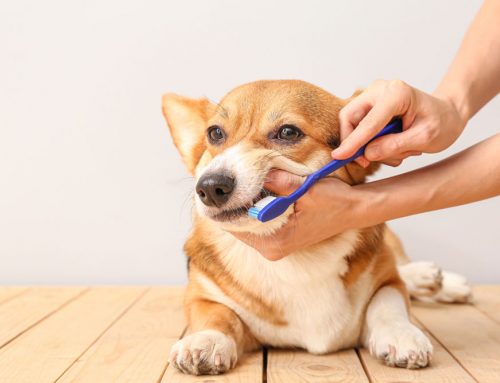
- Dental health: matters because chronic oral bacterial load activates the lymph nodes draining the mouth and throat. Pets with significant periodontal disease often have palpably enlarged submandibular nodes that resolve with appropriate dental care. Our dentistry services include comprehensive dental cleanings under anesthesia and treatment of dental disease.
- Consistent parasite prevention: addresses tick-borne disease risk, intestinal parasite exposure, and external parasite control. Year-round prevention is far more reliable than seasonal coverage given Florida’s climate.
How Quickly Should I Seek Care for Swollen Lymph Nodes?
The right urgency depends on what else is happening with your pet, not just the lymph nodes themselves. A lump in an otherwise well dog is a different scenario than a lump in a dog who is lethargic, off food, or running a fever. Three rough tiers cover most situations.
Same-day emergency signs include severe lymph node enlargement with respiratory distress, sudden severe lethargy with multiple enlarged nodes, fever with systemic illness, or other concerning combinations. These warrant immediate evaluation through our emergency services, which are available 24/7.
Prompt evaluation within 48 hours is appropriate for new lymph node enlargement that is significant in size, multiple enlarged nodes without other obvious cause, persistent enlargement that has not resolved over days, or any lymph node change in your pet who is also showing systemic signs (lethargy, decreased appetite, weight loss).
Scheduled within the week evaluation works for gradually noticed minor changes, mild enlargement that may correlate with a recent minor wound or known issue, or follow-up to confirm resolution after treatment.
When uncertain which tier applies, calling our team for triage guidance is always the right move. We can help determine the appropriate level of urgency based on what you are describing.
Frequently Asked Questions About Swollen Lymph Nodes in Pets
My dog has one enlarged lymph node but seems fine. Can I wait?
A single enlarged node in an otherwise well dog often does have a benign explanation, but the only way to know is evaluation. If something serious is causing the enlargement, earlier diagnosis means more treatment options.
How fast does lymphoma progress?
Untreated canine lymphoma typically progresses over weeks to a few months, with most untreated dogs surviving only 1 to 2 months from diagnosis. Treated lymphoma can produce remissions of months to years. Aggressive treatment outcomes are time-sensitive.
Can I drain or pop a swollen lymph node at home?
No. Lymph nodes should not be drained at home regardless of cause. Even infectious causes should not be addressed by home drainage; bacterial spread risk is real.
Are swollen lymph nodes painful?
It varies. Inflammatory causes often produce tender nodes. Cancerous causes (lymphoma especially) typically produce non-painful enlargement, which is part of why you often do not notice them until they have become quite large.
My cat has had enlarged nodes for months but tests have been normal. What now?
Persistent unexplained lymphadenopathy warrants further investigation. Repeat aspiration, biopsy, additional infectious disease testing, or imaging may be appropriate.
Getting Clear Answers About Your Pet’s Lump
The most anxious part of finding a lump is not knowing what it means. A systematic diagnostic process leads to a clear answer and a plan, regardless of what the answer turns out to be. Earlier evaluation means more options remain available across the spectrum of possible causes.
If you have found a swollen lymph node on your pet, request an appointment at Veterinary Medical Center of Indian River County. Our Vero Beach team will work through the evaluation with you and develop the next steps based on what we find.